


Get in touch at:
ADC Ltd
60 Downend Road
Bristol BS7 9PN
Tel: 0117 952 0786
E-mail: us@adc-ltd.co.uk
web: www.adc-ltd.co.uk
We're also available via our contact form.
Basement Waterproofing
Cavity Drain Systems and Cementious Tanking for Basement Waterproofing by ADC Ltd Bristol. For more information on basement waterproofing please read on or feel free to call us today on 0117 952 0786 to aange for one of our engineers to complete a site visit and survey.
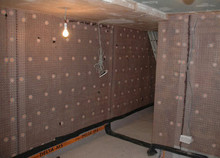
Most cavity drain systems use a high density studded plastic waterproof membrane which acts as a dry lining to ceiling walls and floors. There is an air gap behind which allows water movement which is channelled into a drainage system which in
turn drains to a sump pump with non return valves and then can be drained away from the building.
The membrane is fixed using waterproofed plugs and all joints are sealed using a waterproofed tape. The internal finishes to the membrane can be sand and cement rendered and left or finish plaster
can also be applied. The most common finish is to dry line with plaster board and the floor either boarded or screed finished. Altenatively you can apply a water sand and cement render followed by
a cementious wall tanking followed by a waterproof render coat. This in turn can be finish plastered if desired.
Basement Penetrating
Damp
Basement areas and retaining walls are particularly prone to penetrating damp due to increased water pressures at sub-ground levels. In most cases below ground moisture will penetrate through up to ground level, therefore all plaster and
backing coats will need to be removed up to the DPC level and treated for moisture ingress.
Cementious Tanking
Systems; involve applying two coats of waterproof sand and cement render onto prepared brickwork or block work. Then applying a
cementious waterproof tanking mix over the render followed with a further coat of waterproof render. When dry, the area can be finished with plaster if necessary.
Cavity drain membranes; provide an alternative to conventional cementious tanking systems, which work
by holding the water back. Cavity drain membranes work on the principle of allowing water to continue to penetrate the structure but control it in the air gap and divert it to a
suitable drainage point. They do not allow pressure to build up against the internal construction and the air gap behind the membrane allows the structure to breathe and to some extent to dry
out.
The membranes are loosely laid on floors and fixed to walls using special plugs and sealing materials, with little or no preparation required to the substrate. Once the membrane has been fitted, wall
surfaces can be dry lined or plastered directly and floors can be screeded or a floating dry board system installed.
FREE Basement Waterproofing Survey – Click Here
 Print
Print