


Get in touch at:
ADC Ltd
60 Downend Road
Bristol BS7 9PN
Tel: 0117 952 0786
E-mail: us@adc-ltd.co.uk
web: www.adc-ltd.co.uk
We're also available via our contact form.
Rising Damp
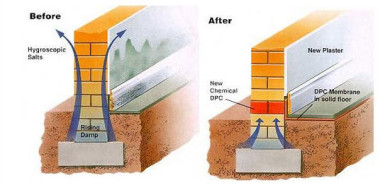
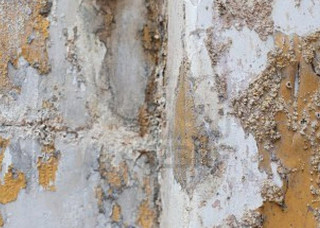
Rising damp is the upward movement of moisture through walls and sometimes floors by capillary action from below the ground.It generally occurs up to 1.2 metres in the walls, depending on the masonry types and outside ground levels. Salt deposits generally form a horizontal tide mark, below which there will be discolouration, peeling wallpaper and possibly white efflorescent salts which have been drawn out of the brickwork by the water.
Floors can display moist patches and staining, materials such as stone and brick are naturally porous and will soak up moisture like a sponge without the aid of a damp proof membrane or rising damp treatment. When a more modern building, a damp proof course is installed at the time of construction, however, when this treatment does not exist or becomes damaged the most common result is rising damp.
The result of this is damage to interior plaster and wall coverings. If left untreated it will rot any floor joists and other interior timber that come into contact with it, as well as causing more damage to the interior of the property.
Treatment for Rising Damp
A new DPC (damp proof course) will need to be installed. This is achieved by removing all internal plaster and backing coats back to the brickwork to stop any chance of bridging the affected areas.
Drilling holes into the base of the wall at regular intervals and injecting a new environmentally friendly DPC formula. This is a water based Thixtropic gel, which diffuses naturally into the substrates. After injection, a gel reacts to form a water-repellent silicon resin network within the capillaries of the substrate. This network is permeable to water vapour which means that the walls can breathe and dry out naturally. Once the affected area has been injected a render is applied to prepared brickwork followed by multi finish plaster once the render coat has been allowed to dry out.
 Print
Print